Santorini Wine & Food Guide: Assyrtiko, Vinsanto & Local Cuisine
Santorini grows wine and food unlike anywhere else in Greece. The reason is the soil, volcanic ash and pumice from the 1600 BC eruption, stacked deep, mineral-rich and porous. This is the local's guide to what to drink, what to eat, and where.
SANTORINI · MARINAKIS TOURS
The answer, at a glance
How much is a private Santorini tour?
Our 3-hour private tour starts at €220 for 2 guests. A full 8-hour tour starts at €400 for 2 guests. Prices change with group size. Each tour page shows its itinerary and group price table.
Can you arrange an airport or ferry port transfer?
Yes. Private airport to Fira transfers start at €40 and airport to Oia at €60 for up to 3 passengers. Private Athinios port to Oia starts at €80. Each additional passenger costs €5 on these routes. Displayed transfer fares exclude VAT. We confirm the final price and any applicable taxes before booking.
The Volcanic Terroir, Why Santorini Wine Is Different
It's the soil. Layers of volcanic ash, pumice and mineral-rich earth, built up over thousands of years of eruptions. The vines taste it. The wines have a flinty mineral edge, sharp acidity, and a structure that ages well.
The climate adds the second half. Intense sun, constant Aegean wind, almost no rain in the growing season. Vines here are 3,500 years adapted, deep roots that draw moisture from the morning sea mist, and the kouloura training method (vines woven into low coiled baskets close to the ground) that shelters the grapes from the wind and concentrates the flavour.
Assyrtiko, The Grape That Built the Reputation
Assyrtiko is the native white. Bone dry, high acidity, citrus and stone fruit, with a saline mineral edge that makes it pair almost perfectly with grilled fish. It tastes like the Aegean.
Assyrtiko is grown elsewhere in Greece now, but Santorini is still the benchmark. Old vines (some over 200 years), volcanic soil, traditional winemaking. Look for Nykteri on a list, it's a barrel-fermented Assyrtiko, richer and more complex.
Vinsanto, Santorini's Dessert Wine
Vinsanto is made from sun-dried Assyrtiko and Aidani grapes. The grapes lie on straw mats in the August sun for 12–14 days, concentrating the sugars. The wine is then aged in oak for a minimum of 2 years, often 10, 15, even 20.
The colour is amber. The flavour is dried apricot, honey, caramel, coffee, orange peel, held together by Santorini's trademark acidity so it never goes syrupy. A bottle of aged Vinsanto is probably the best (and most portable) souvenir you can take home.
Wineries Worth Visiting
There are over 15 wineries open for tasting. Santo Wines has the best caldera view (cooperative, large, easy). Venetsanos is the restored 1947 winery on the rim, small, beautiful, with a tunnel cut into the cliff. Estate Argyros is one of the oldest and most respected. Gavalas is a family winery from 1879. Hatzidakis is the organic name, known for serious Assyrtiko.
Our wine tours visit 2–3 of these over a half or full day, with an English-speaking guide, all tastings included, and transport in an air-conditioned van. We know the winemakers, so we can arrange private tastings and cellar tours that walk-in visitors don't get. From €100 per person.
Local Dishes Worth Ordering
Santorini's volcanic soil makes ingredients taste louder. The cherry tomatoes are the obvious example, small, dense, sweet, and the key ingredient in tomatokeftedes (cherry-tomato fritters). Order them anywhere.
Other essentials: fava (yellow split-pea purée with olive oil, capers and onion, the island's comfort food), white aubergine (milder and creamier than the purple kind, usually grilled), chlorotyri (a tangy fresh goat cheese unique to Santorini), and whatever fish came in that morning. Local capers are exceptional, sharp, aromatic, and used in nearly every salad.
Where to Eat, Caldera Fine Dining and Village Tavernas
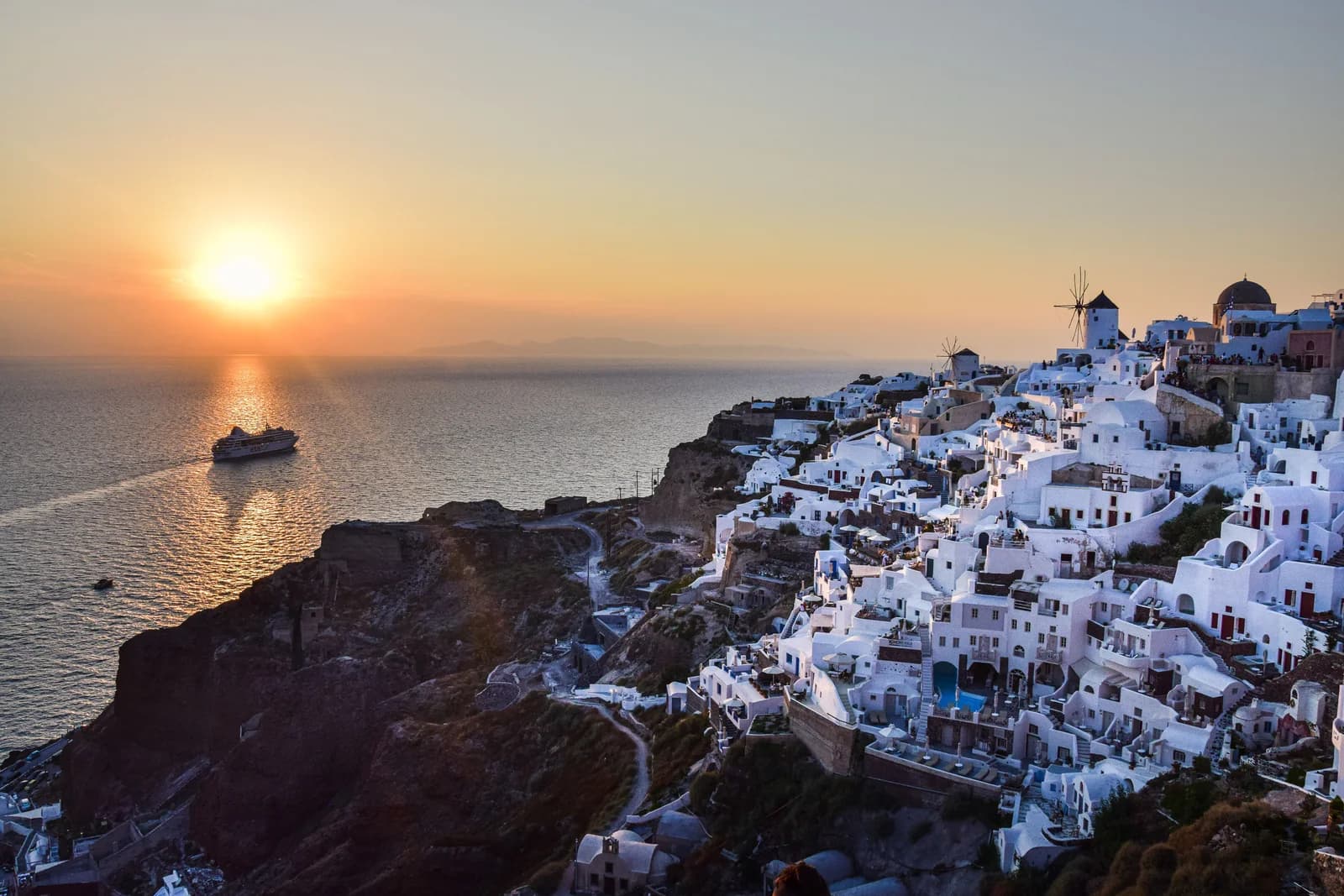
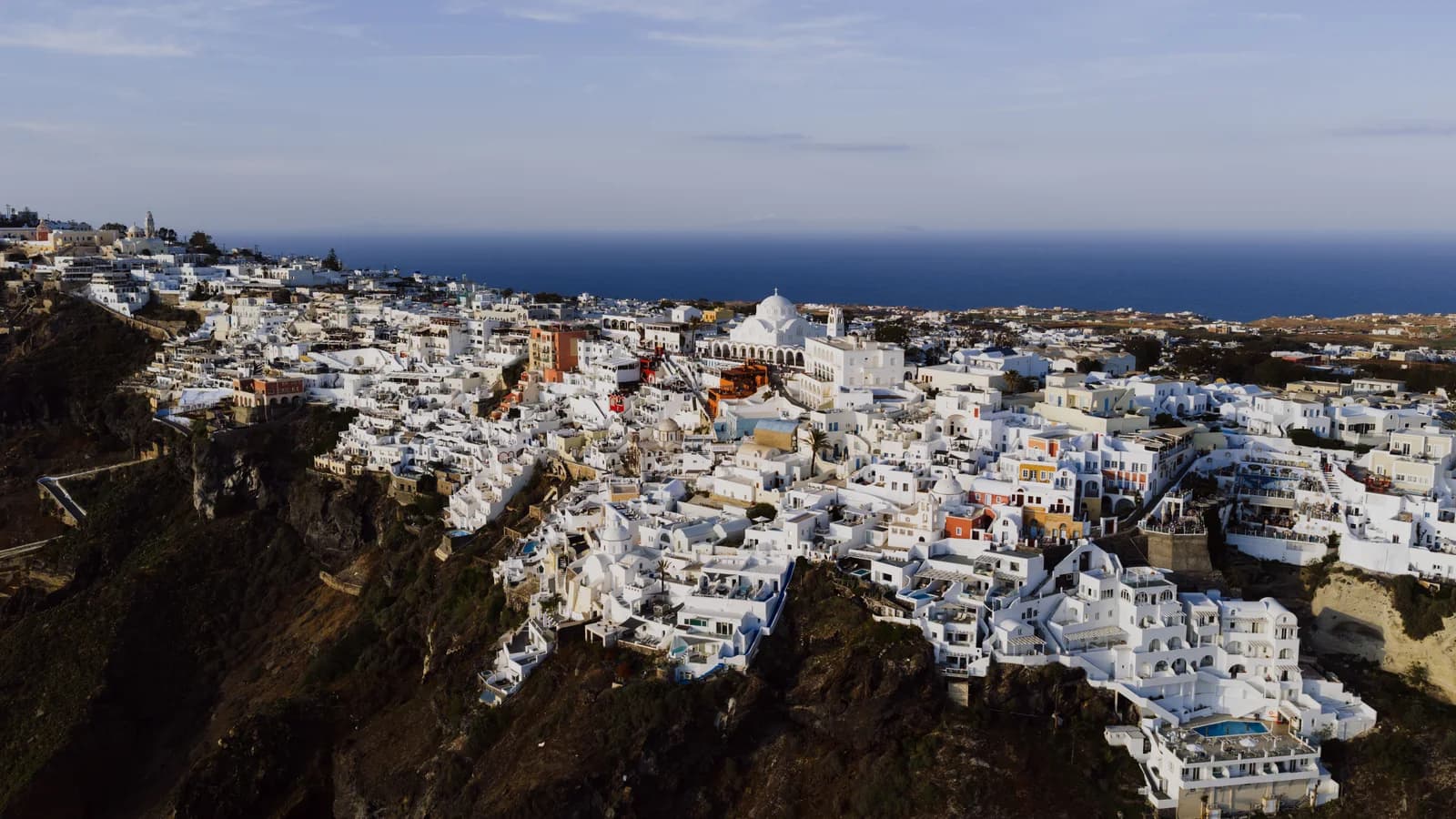
Two ends of the same spectrum, both worth doing. The caldera-edge places in Fira, Firostefani and Imerovigli serve modern Mediterranean cooking with wine lists that take 20 minutes to read and views no photo does justice. They're a memory and a small fortune. Reservations are essential in summer.
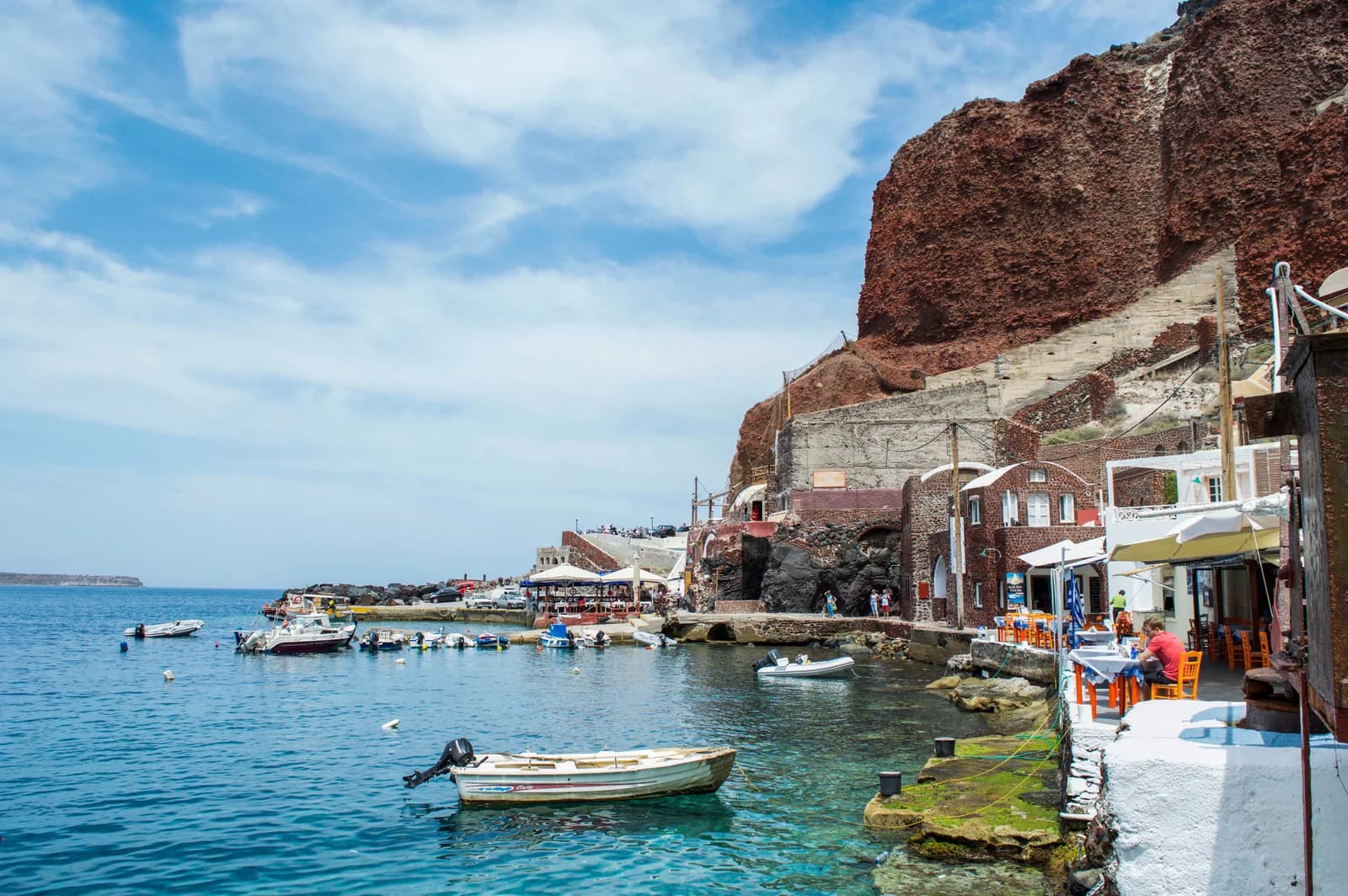
The village tavernas in Pyrgos, Megalochori and Akrotiri serve honest cooking at a fraction of the rim prices. Fava the way grandmothers make it, grilled octopus hung outside the kitchen to dry, house wine poured from the barrel. Selene in Pyrgos, Metaxi Mas in Exo Gonia and To Krinaki in Finikia are three names worth booking. Do both, the rim for the view, the village for the food.
Wine and Food Pairings That Work
Assyrtiko with grilled fish is the obvious pairing, the acidity cuts through octopus, sea bream or lobster perfectly. Dry rosé from Mandilaria grapes is good with tomatokeftedes and fava. Vinsanto goes with strong cheeses, baklava, or on its own at sunset.
At any taverna, order mezes (small plates), it's the best way to sample the kitchen. House wine in a carafe is usually a local Assyrtiko and usually excellent. Let the kitchen tell you what's fresh that day. That's how locals eat.
Cooking Classes and Food Experiences
A handful of operators run cooking classes, usually a market or farm visit, hands-on cooking with a local chef, then the meal you cooked, with wine pairing. It's a good way to take Santorini home in a useable form: the recipes, the techniques, and the memory of cooking in a caldera-view kitchen.
Planning Your Wine and Food Days
Our wine tours handle the logistics, know the winemakers, and can be customised. For restaurants, caldera fine dining or hidden village tavernas, just ask. After 25 years on the island we know every kitchen that matters.
Good questions. Clear answers.
How much is a private Santorini tour?
Our 3-hour private tour starts at €220 for 2 guests. A full 8-hour tour starts at €400 for 2 guests. Prices change with group size. Each tour page shows its itinerary and group price table.
Can you arrange an airport or ferry port transfer?
Yes. Private airport to Fira transfers start at €40 and airport to Oia at €60 for up to 3 passengers. Private Athinios port to Oia starts at €80. Each additional passenger costs €5 on these routes. Displayed transfer fares exclude VAT. We confirm the final price and any applicable taxes before booking.
Is my booking confirmed when I send the form?
The form sends an availability request to our team. We reply to confirm availability, pickup details and the final price. Please wait for that confirmation before making a payment.